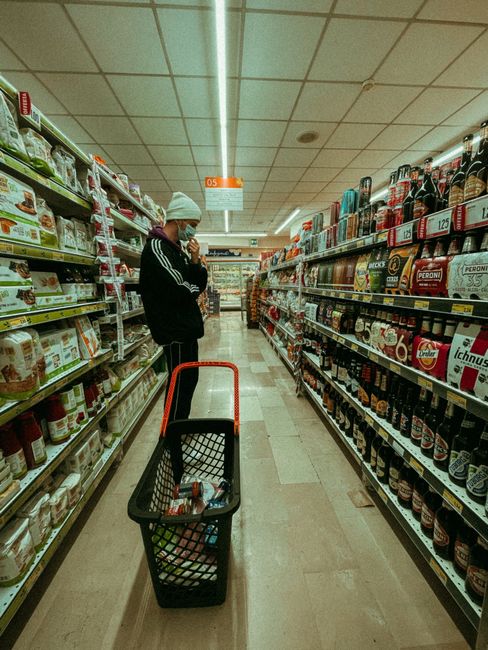
The best way to compare Drogerie Angebote is to price your complete list across nearby stores, check pack sizes, and weigh the basket saving against the extra journey. A spectacular discount on shampoo means little if toothpaste, detergent, and razor blades cost more in the same shop.
In 1854, cholera was killing people around Broad Street in London’s Soho. Physician John Snow faced a jumble of addresses and competing explanations. Instead of focusing on the most conspicuous case, he mapped deaths across the neighborhood and looked for the pattern connecting them.
The cluster pointed toward the public water pump on Broad Street. Snow persuaded local authorities to remove its handle, although historians note that the outbreak was already subsiding. His investigation became an important example of how comparing the whole pattern can reveal what isolated observations conceal. Steven Johnson documents the episode in The Ghost Map.
Your Drogerie list carries much smaller stakes, of course, but the comparison problem has the same shape. One bright discount can command your attention. The full set of prices tells you where the better shopping plan actually is.
Start with the list, not the Prospekt
A weekly catalogue is designed to show you selected offers. Your household needs are broader: toothpaste, shampoo, deodorant, washing powder, toilet paper, menstrual products, nappies, shaving foam, or skincare may all land on the same list.
Write down what you expect to buy before opening retailer apps or catalogues. Include the format that matters when it affects price: sensitive toothpaste, fragrance-free detergent, a particular razor system, or shampoo within a size range. This keeps an attractive offer from quietly changing the purchase.
Then compare the entire basket. A store may advertise the cheapest shower gel while charging more for three other products you need. Another may have fewer headline offers yet produce the lower total.
Best Price Alert is built around that full-list decision. It uses current weekly offers and nearby prices to rank one-store and multi-store plans. You can see whether one stop makes sense or whether splitting the list produces enough savings to justify another journey.
Make pack sizes comparable
Drogerie shelves make direct comparison harder because similar products often come in different quantities. A lower shelf price can belong to a smaller bottle, fewer razor cartridges, or a shorter roll pack.
Compare like with like wherever possible. Check the price per litre, kilogram, item, wash, or sheet when the retailer provides it. When it does not, use a quick calculation:
`pack price ÷ usable quantity = comparable price`
The “usable quantity” matters. Two detergents with similar bottle sizes may promise different numbers of washes. Razor handles may be inexpensive while their compatible replacement blades determine the longer-term cost. A multipack can lower the unit price, but only if you will use everything before it deteriorates or clutters the cupboard.
Also check the offer conditions. A discount may apply only to one size, scent, product line, or loyalty-card price. Our guide to decoding German weekly deals explains why those details can change what appears to be the cheapest option.
Put a price on the second stop
Suppose one store wins on detergent and toothpaste, while another has better prices on shampoo and shaving supplies. Splitting the list may lower the total, but the difference needs to cover the inconvenience.
Start with stores near the route you already plan to take. Then compare two practical choices:
- What does the cheapest one-store basket cost?
- How much less does the best two-store basket cost, and how much farther must you travel?
There is no universal threshold. A second stop beside your usual route may be easy to accept. Crossing Cologne for a small saving may consume more time and transport cost than the offer returns. Someone walking between nearby shops will judge the trade differently from someone driving with children.
That is why Best Price Alert lets you control the balance between convenience and savings. The ranked plans show total basket price alongside travel distance, so the lowest number cannot hide an awkward route. For a closer look at this decision, read the 20-minute detour math.
Build a repeatable Drogerie routine
Drugstore purchases often recur. Save a reusable list for the essentials you buy regularly, then adjust quantities before each comparison. Watch expensive or less frequent products for price alerts rather than checking them manually every week.
Run the comparison before leaving home, while current offers can still shape the plan. Start with the one-store result. Check the two-store option next, then decide whether its saving earns the extra trip. Plans involving more stores deserve a higher bar because every additional stop adds time and distance.
John Snow’s map worked because he examined the pattern instead of the loudest isolated detail. Apply that discipline to your next Drogerie shop: enter the whole list, normalize the pack sizes, and let the basket total decide which offer deserves your attention.
Comments
No comments yet.